

SCHIAPARELLI: Fashion Becomes Art
“Nobody has been able to pronounce my name properly... but everybody knows what it means.” - Elsa Schiaparelli
When Fashion becomes Art. I have been pondering this notion for a little while now, and never has this been exemplified more than through the timeless work of Elsa Schiaparelli.
I truly believe fashion is an art form - whether history has heralded it as such or not. As a girlie who loves a good definition, I had to consider - what is ‘art’? I stumbled across a few definitions that resonated with me that I’d love to share:
“Art is an expression of our thoughts, emotions, intuitions, and desires, but it is even more personal than that: it’s about sharing the way we experience the world, which for many is an extension of personality. It is the communication of intimate concepts that cannot be faithfully portrayed by words alone. And because words alone are not enough, we must find some other vehicle to carry our intent.”
“‘Art’ is where we make meaning beyond language”
“Art is a language formed by one but holds the capacity and unique quality of being understood and engaged with by many”
With that, I can confidently say that I consider fashion to be art. It holds such a personal quality to it because, as much as the fashion industry itself is extremely consumer-focused, it’s always interesting to see how a lot of these Maisons got their start, and the ideas and interests that helped birth them. Maison Schiaparelli is one I have always been intrigued by, as it is not difficult to recognise just how striking the brand is and has always been. I can spot Schiaparelli on a red carpet from a mile away - just look for the most maximalist, intriguing and extravagant look - 9 times out of 10 you’re looking at a Schiaparelli piece.
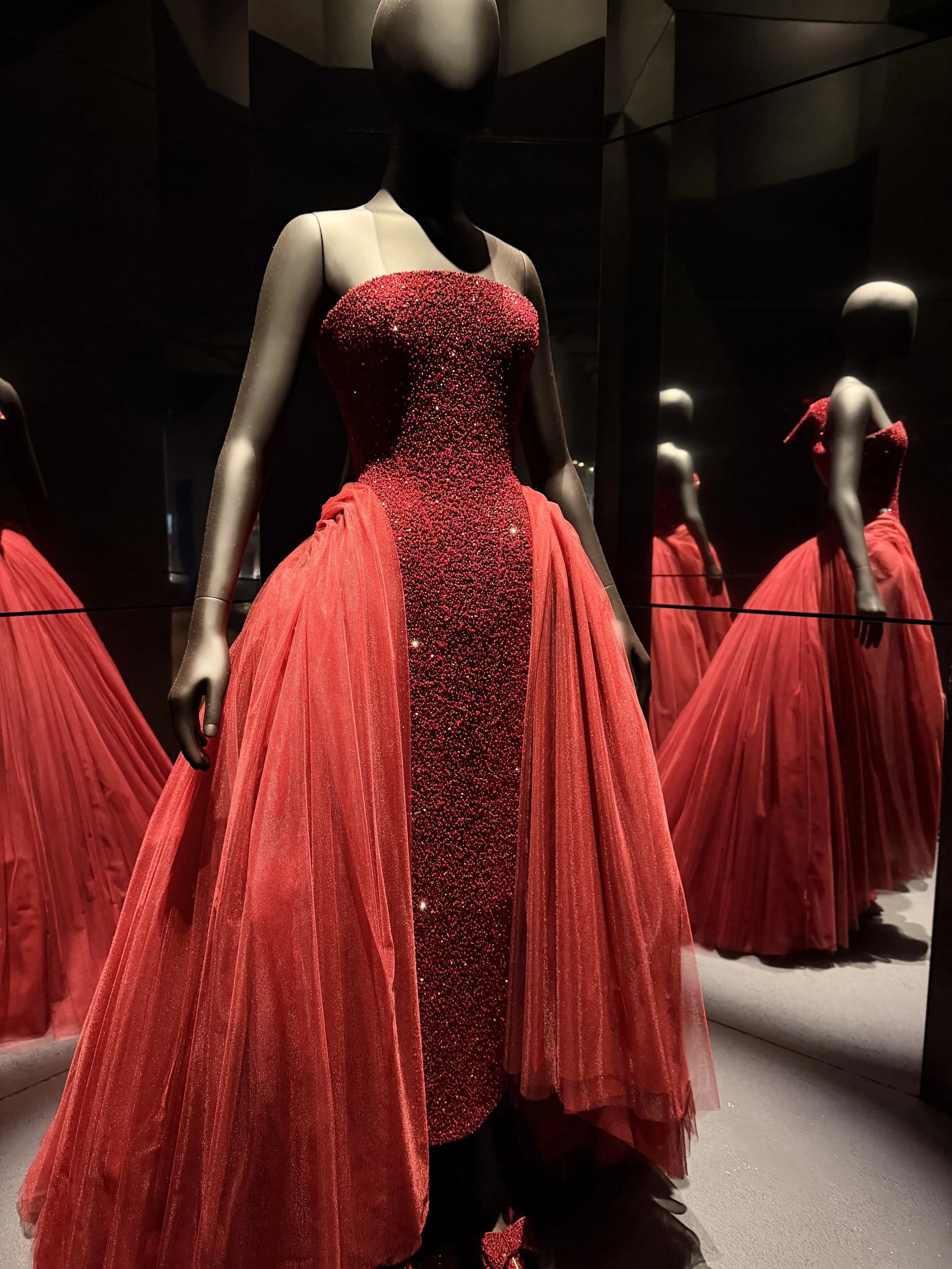
worn by Ariana Grande at the 97th Academy Awards (2025)
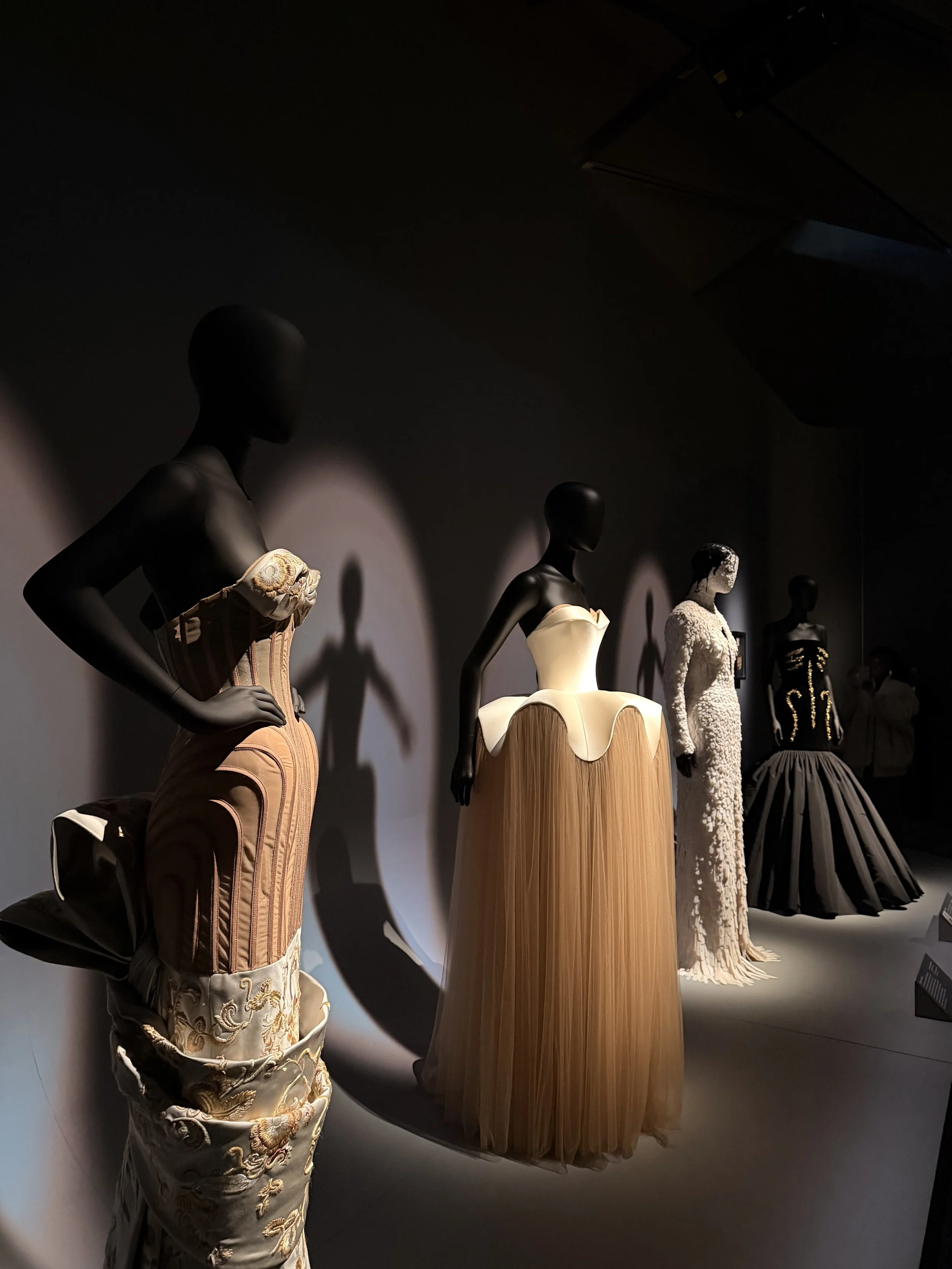
Dress #2 worn by Ariana Grande at the 97th Academy Awards (2025)
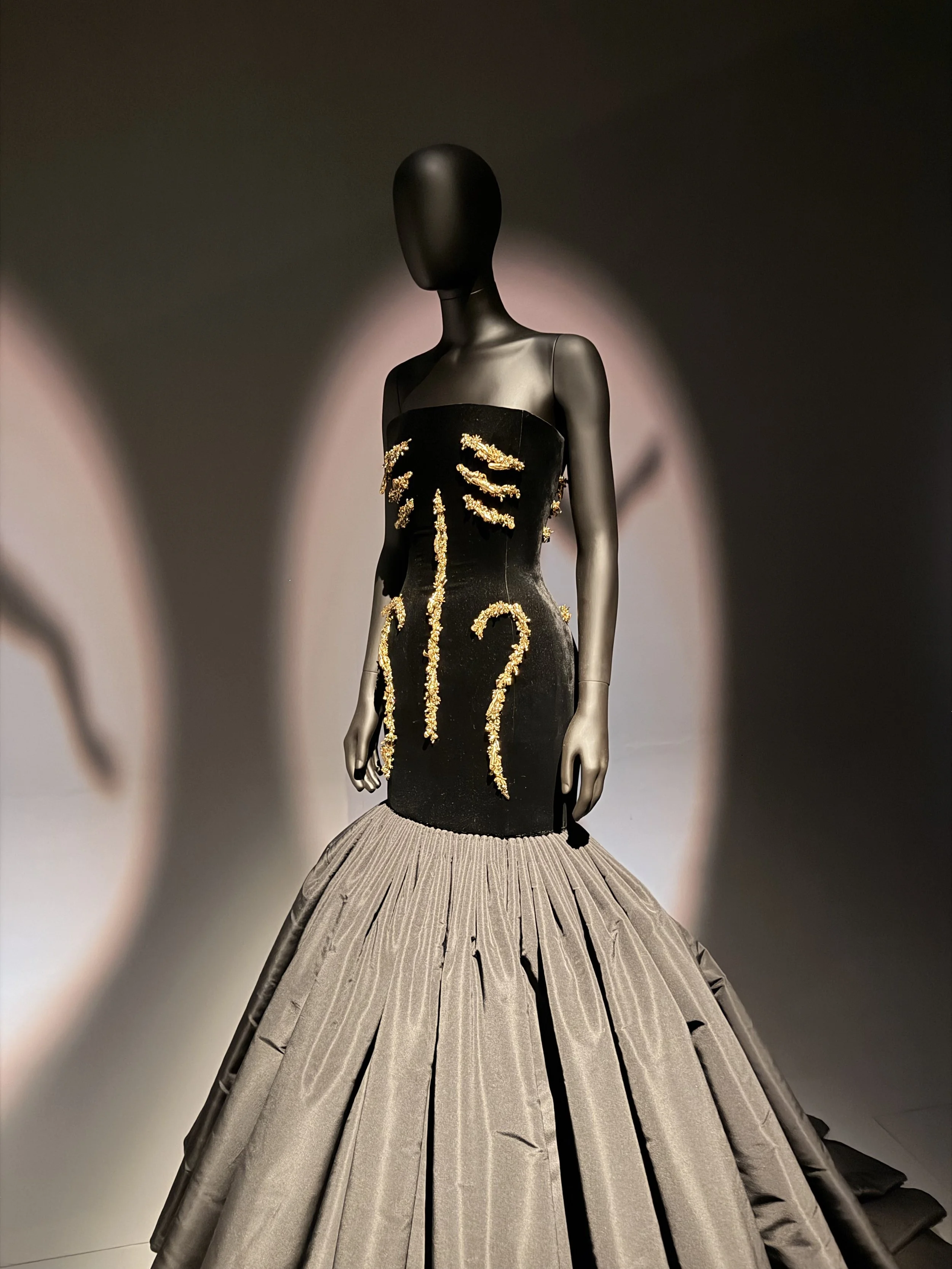
worn by Dua Lipa at the 2024 Golden Globe Awards
And so, best believe once the V&A announced they would be hosting an exhibition to discuss Schiaparelli’s journey in the world of fashion, I knew I would have to be there and checked their website every month for six months in order to get tickets. It paid off because, as my incredible friend and I, Ronke, sauntered through the exhibition, we were awestruck.
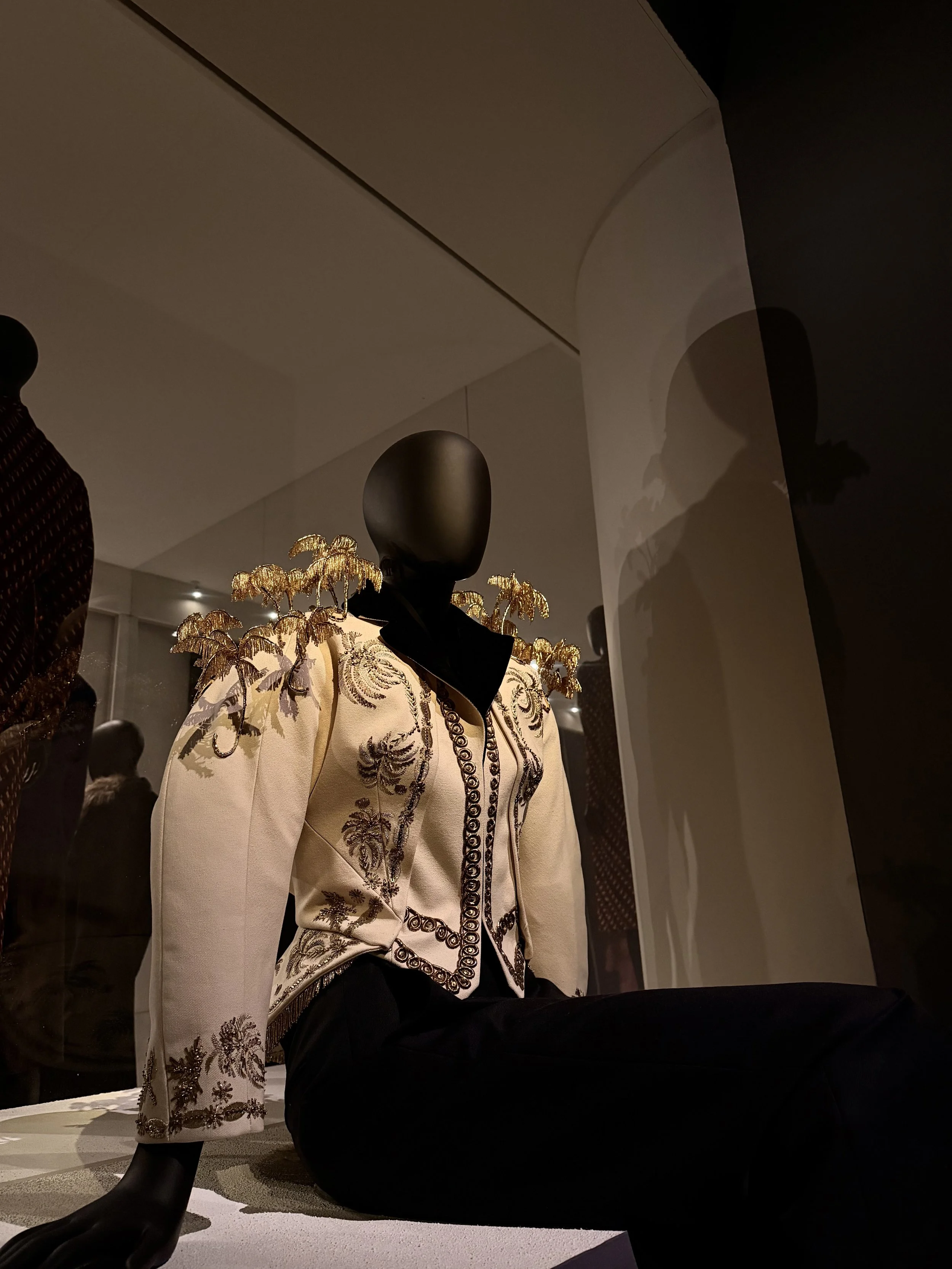
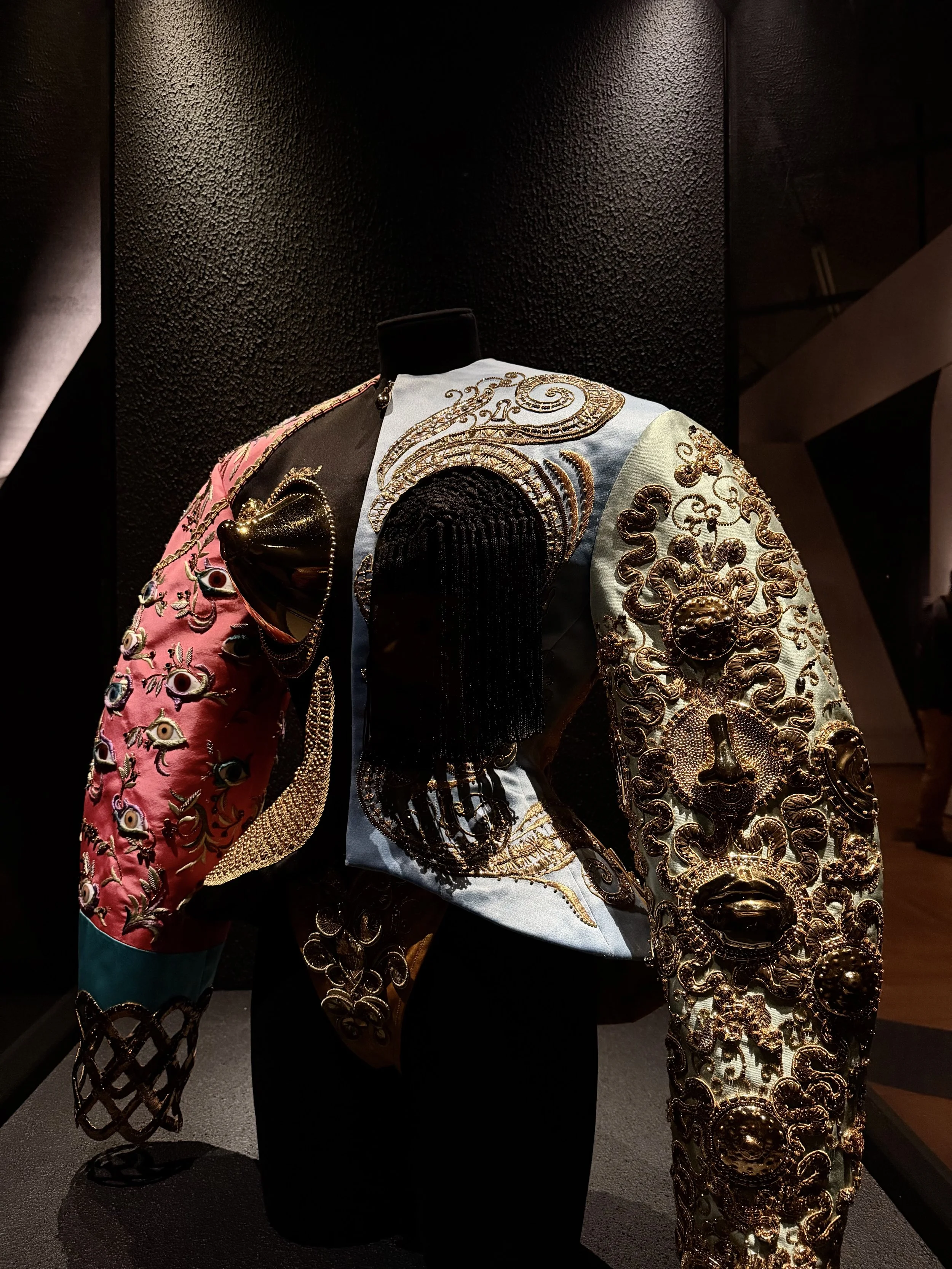
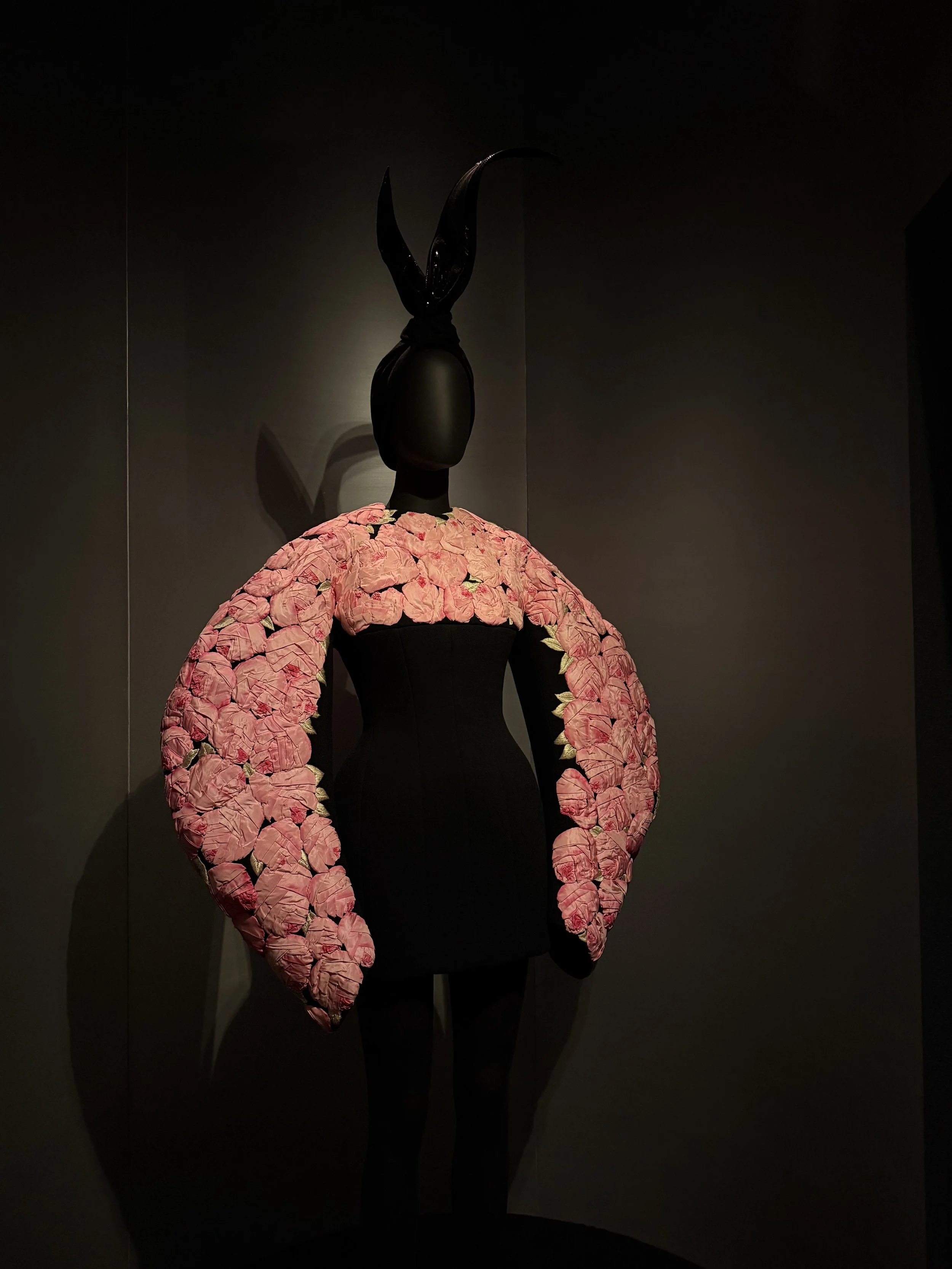
The level of detail, care and consideration that has become a hallmark of the brand was such a delight to see. Ms Elsa always had a clear point of view and was a trailblazer before that was even a thing. From her love of a powersuit in the 1920s when flapper dresses were all the rage, to her decision to ensure certain dresses had pockets - she had a doggedness that I’m pretty sure was uncommon for a woman at that time. I particularly loved seeing how her clientele grew and how women who were known to walk to the beat of their own drums became her kinfolk. There’s something special about when a brand’s ethos is so clearly communicated through the calibre of clients who wear the clothes. From Josephine Baker to Katharine Hepburn, to Diana Vreeland - Schiaparelli has been known to dress women who dare to dream, who would undoubtedly be best dressed at the function, and who have a very clear sense of self - whether that be through their personhood or their life’s work.
I read a Times review which said that the exhibition “makes you yearn for the days of dressing up — really dressing up — when a different perfume was required for morning, afternoon, evening and bedtime” and I couldn’t agree more. Each room took us on a journey. ‘Pour la Ville’ explored what modern-day wear looked like as told by Elsa Schiaparelli. ‘Pour le Soir’ showed us the endless possibilities of evening wear crafted by a fashion auteur who never settled (Schiaparelli was said to have urged textile manufacturers to bring her their newest and best materials).
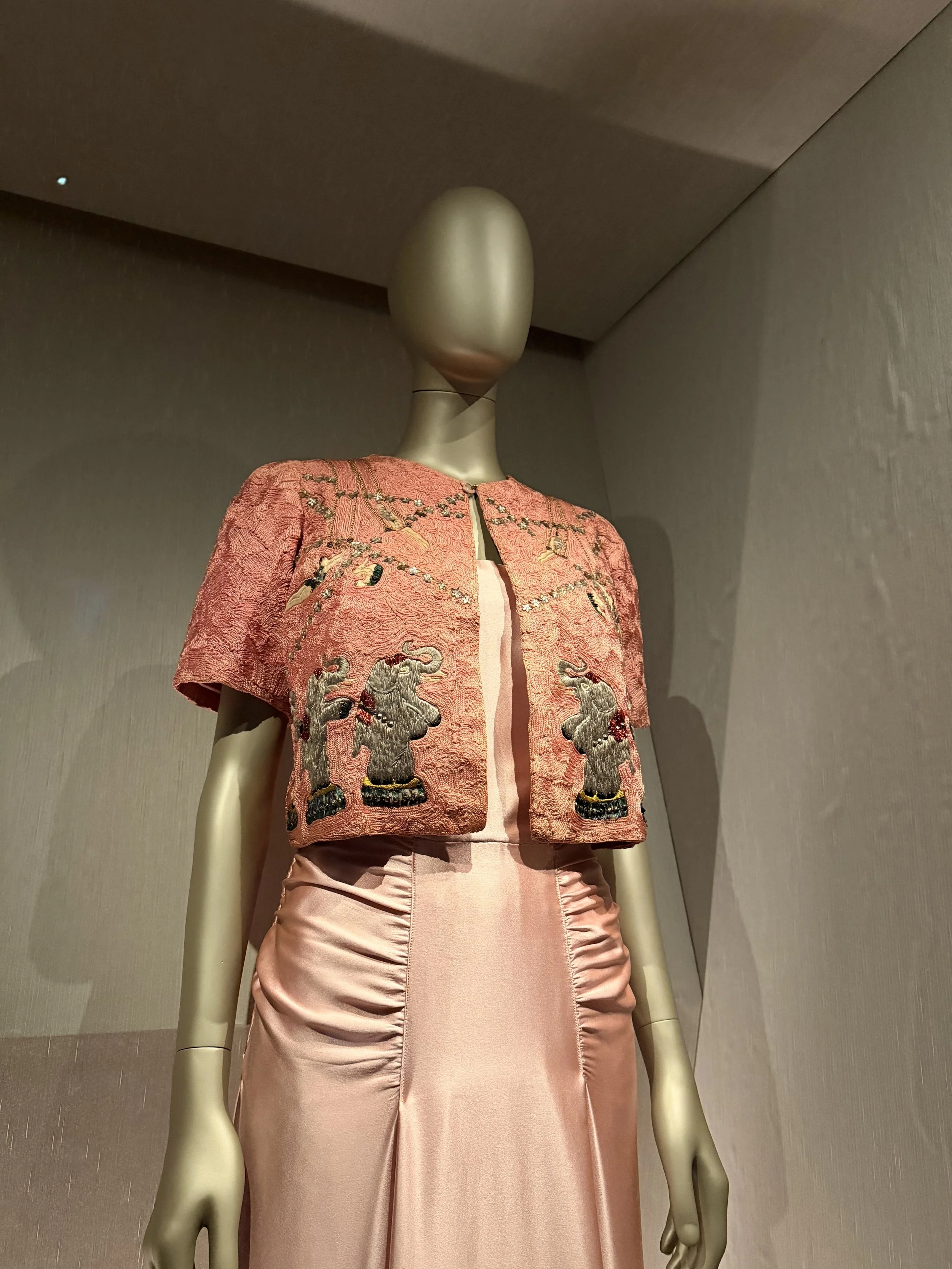
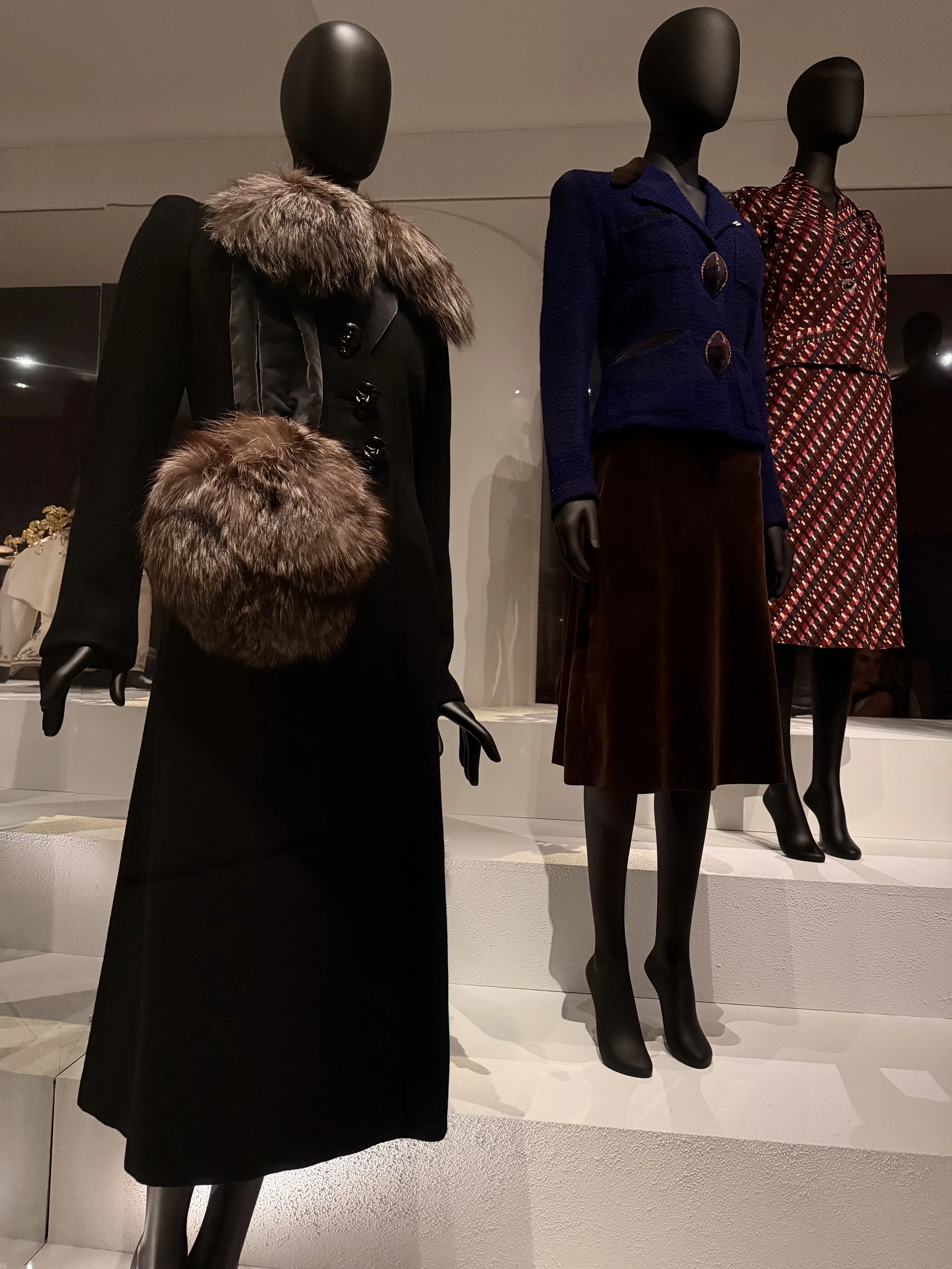
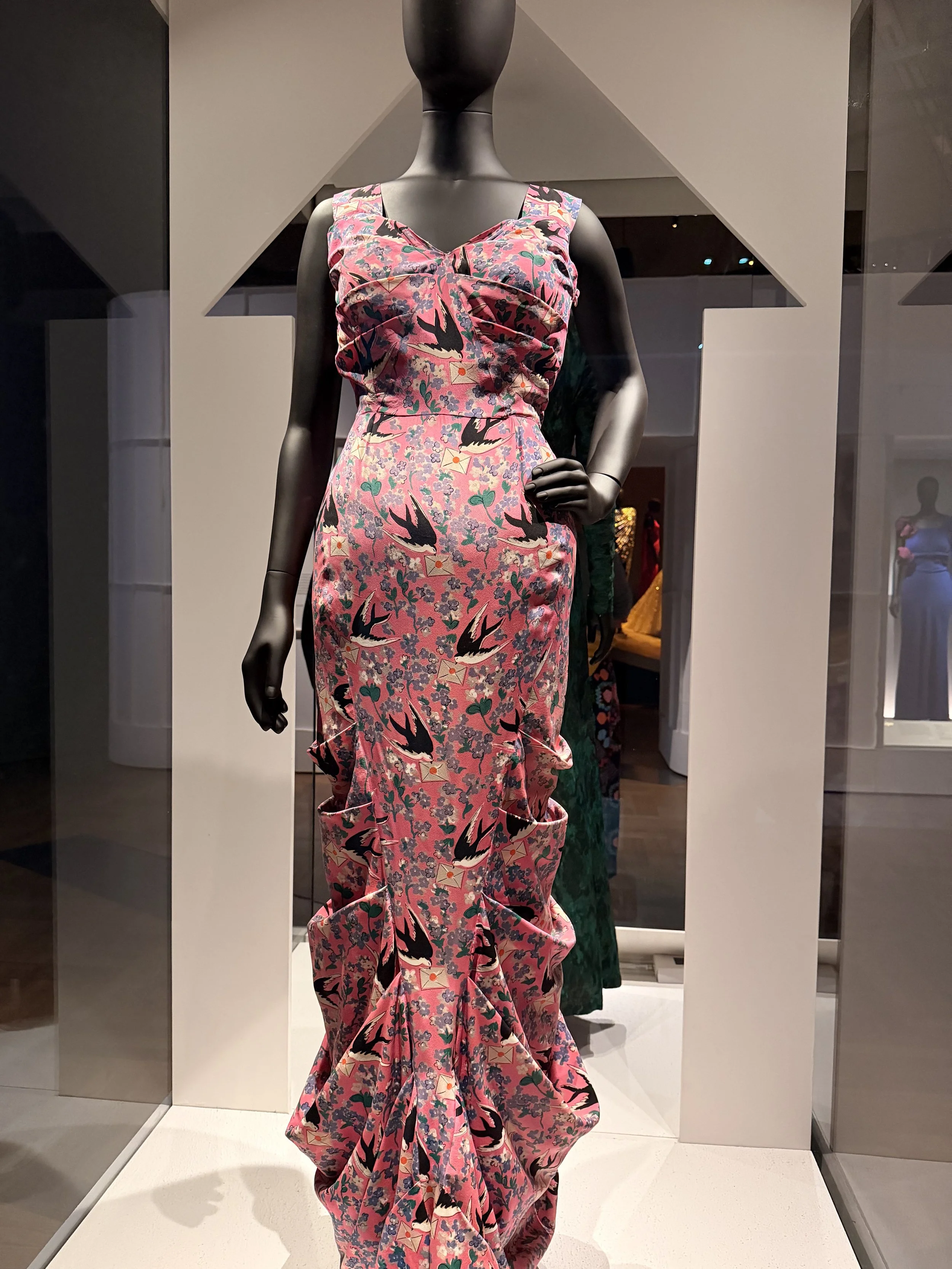
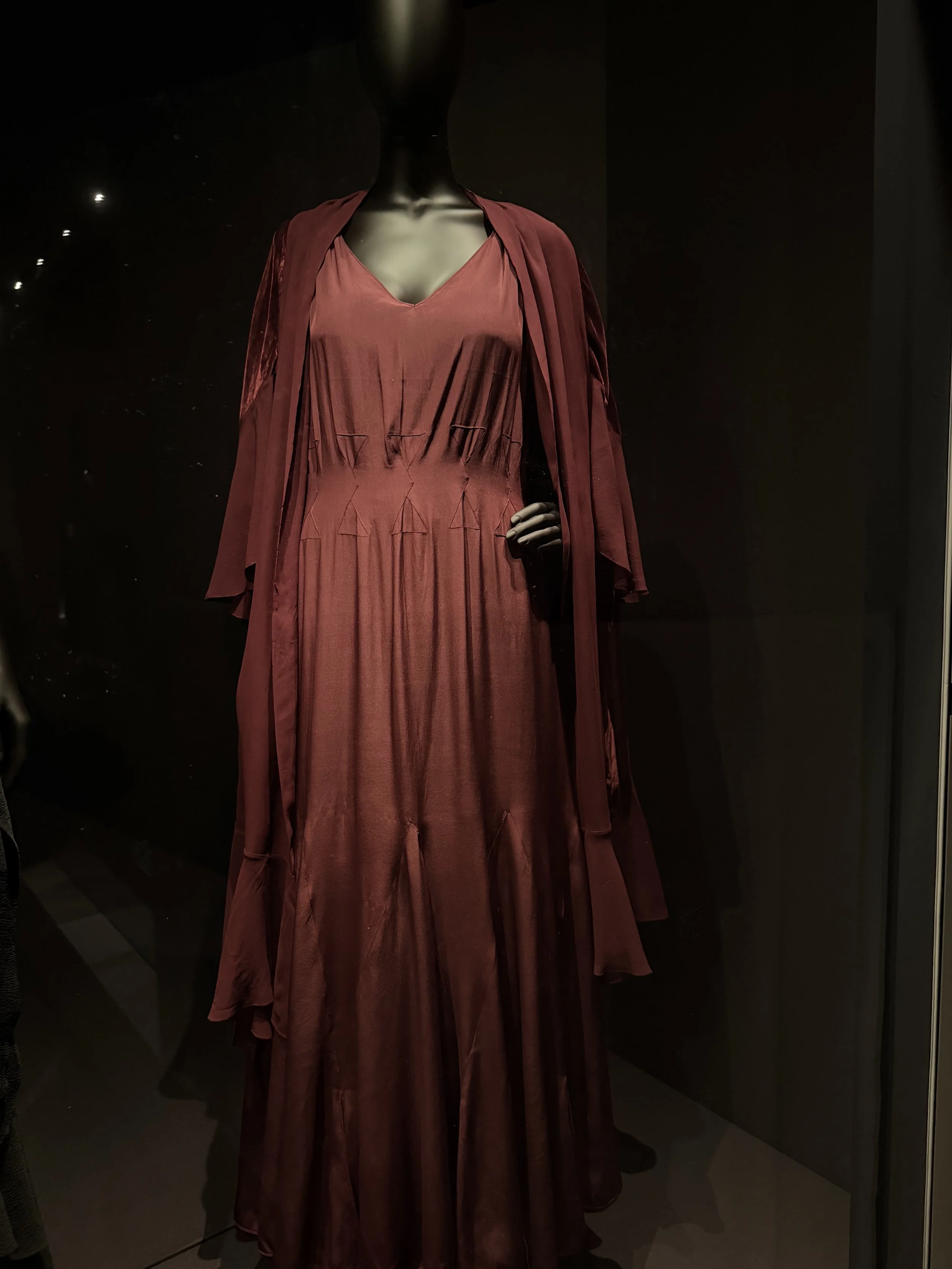
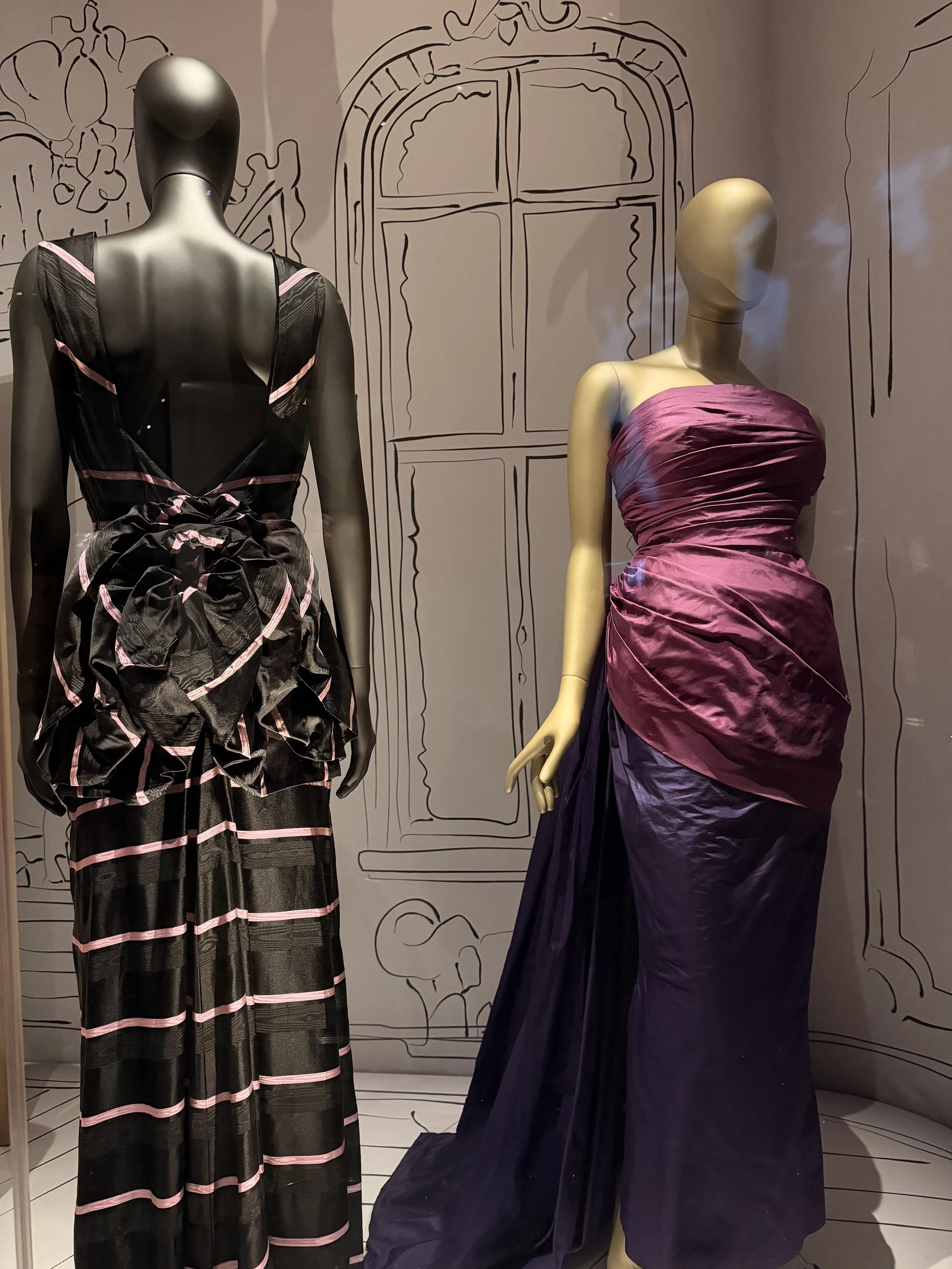
from the ‘Bustle Collection’
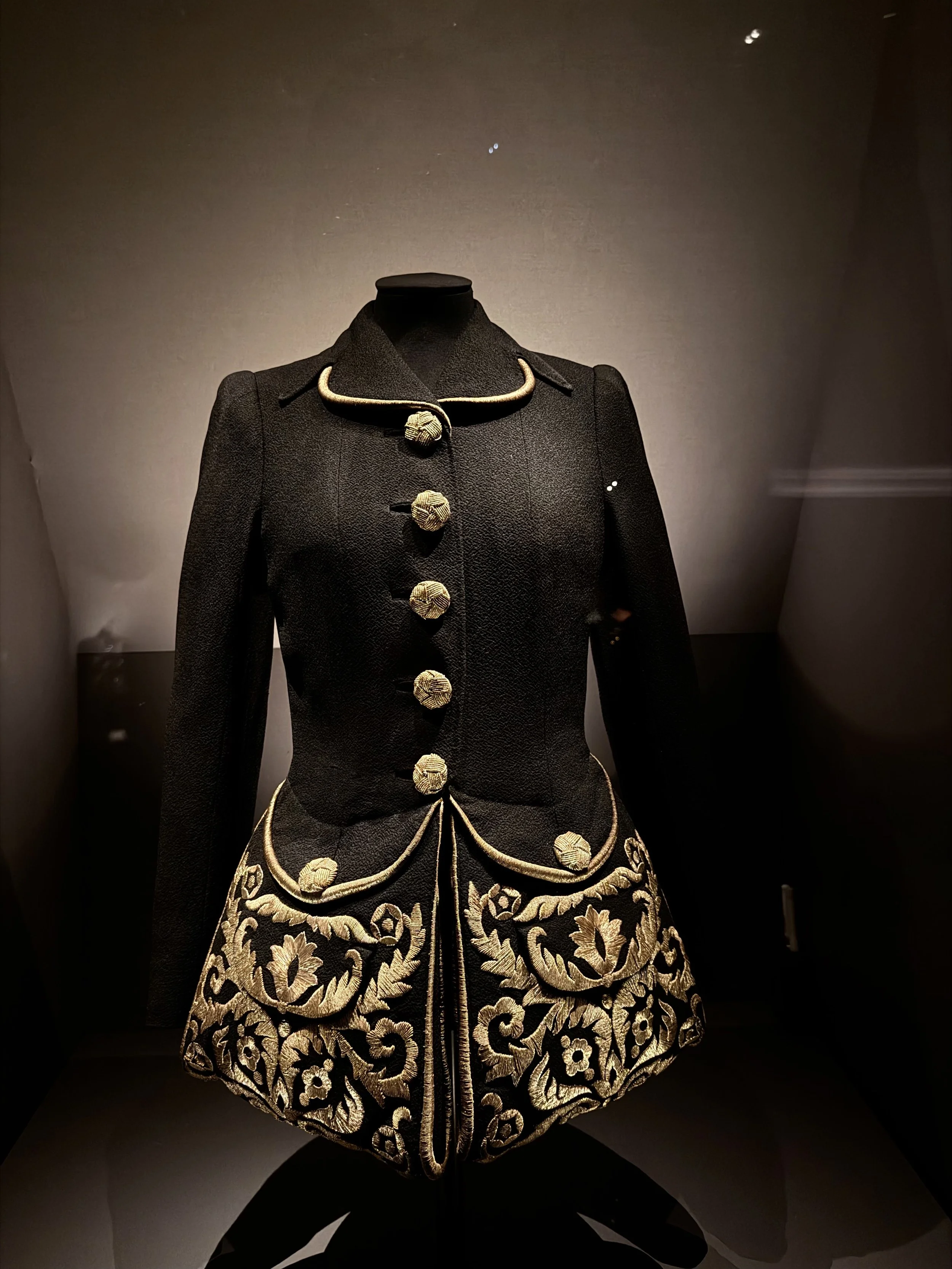
In the ‘Creative Constellations’ room, I found it fascinating how she was ridiculed for her friendships and frequent collaborations with fellow surrealist artists such as Salvador Dali and Jean Cocteau. I am not a proponent of rivalry within one’s field, but the fact that this was a chip Chanel had on her shoulder, even referring to Ms Elsa as "that Italian artist who makes clothes” doesn’t really stand as a justifiable argument in my opinion. I think these connections and her strong point of view as an artist are what added an eccentric flavour to Schiaparelli’s design decisions. She believed that “the presentation of fashion was a work of art” and a lot of what has become the house codes of the Maison today found their roots and establishment in Art, and that fusion created a really interesting dialogue. For example, the Bustle collection, which featured evening dresses that were padded and had a fullness in certain areas, communicated an affinity for nostalgia and a desire to hold onto the past as a form of security amidst the undercurrents of World War II. Or was it her approach to accessorising - from space, animals to the human anatomy - everything served as a source of inspiration and was infused into her work in very clever ways - one thing about her, that shock value was going to be ever present! This radical approach to her work is, in my opinion, what paved the way for artists and designers to merge into one.
Cue, Mr. Daniel Roseberry.
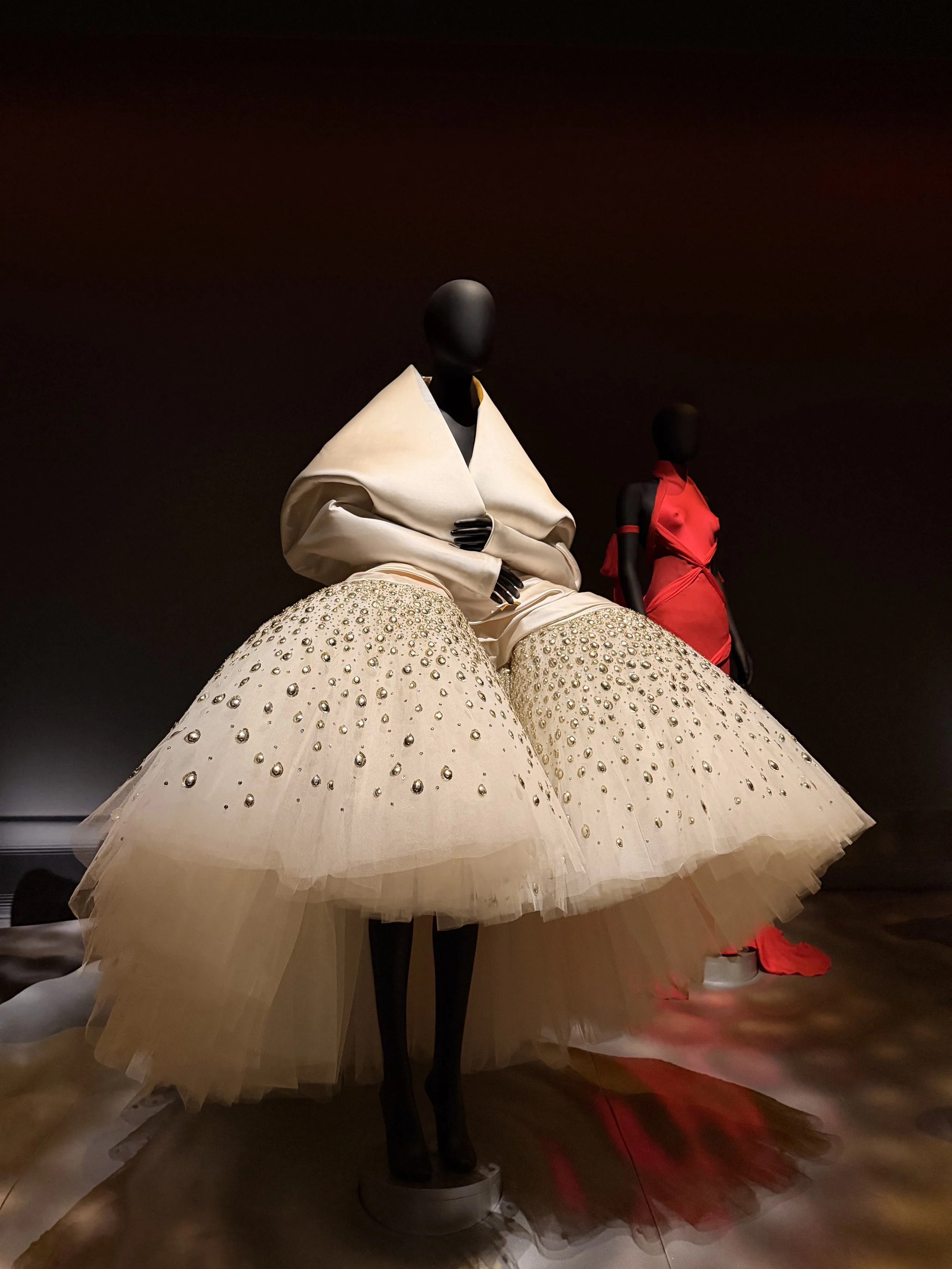
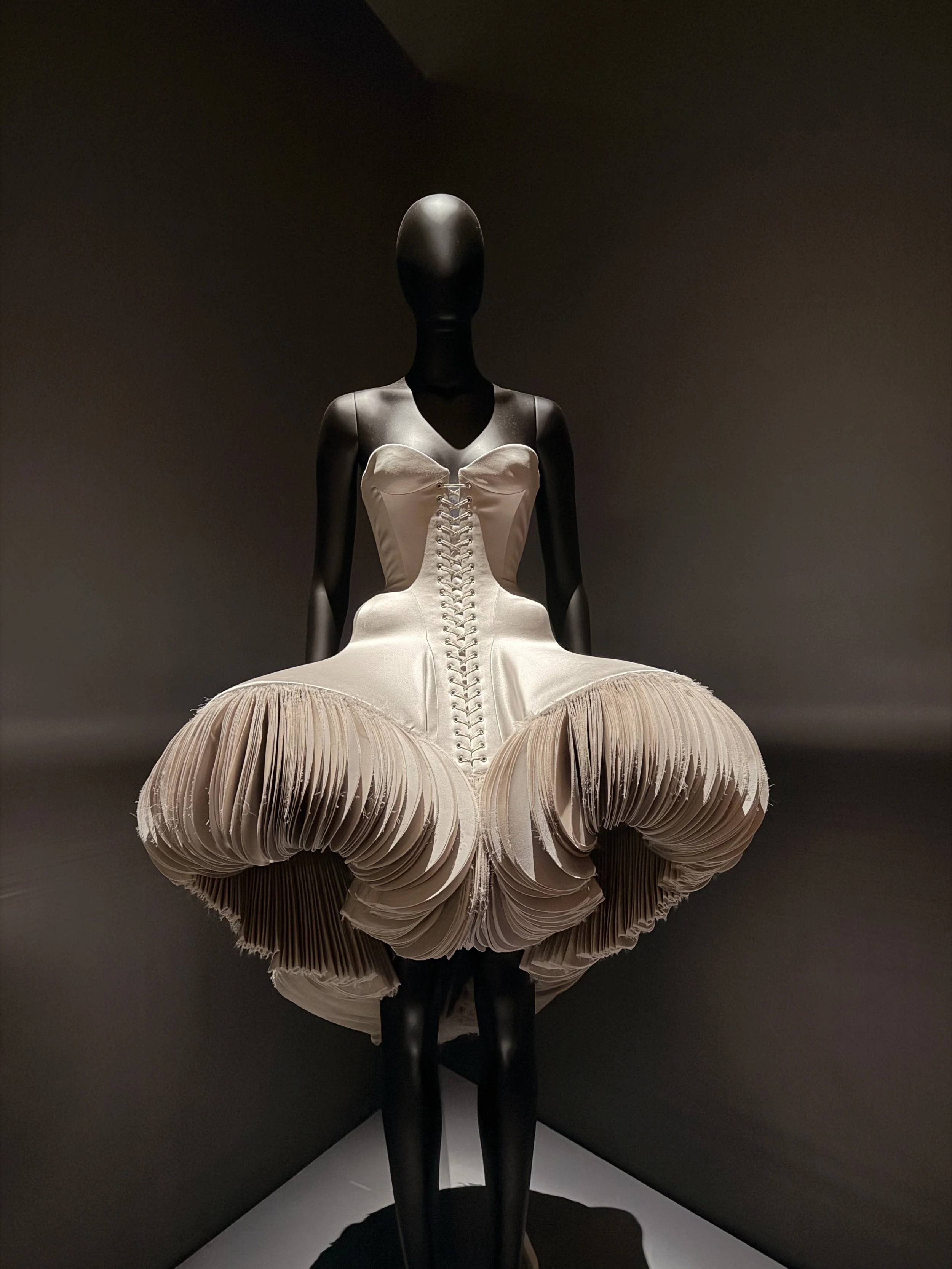
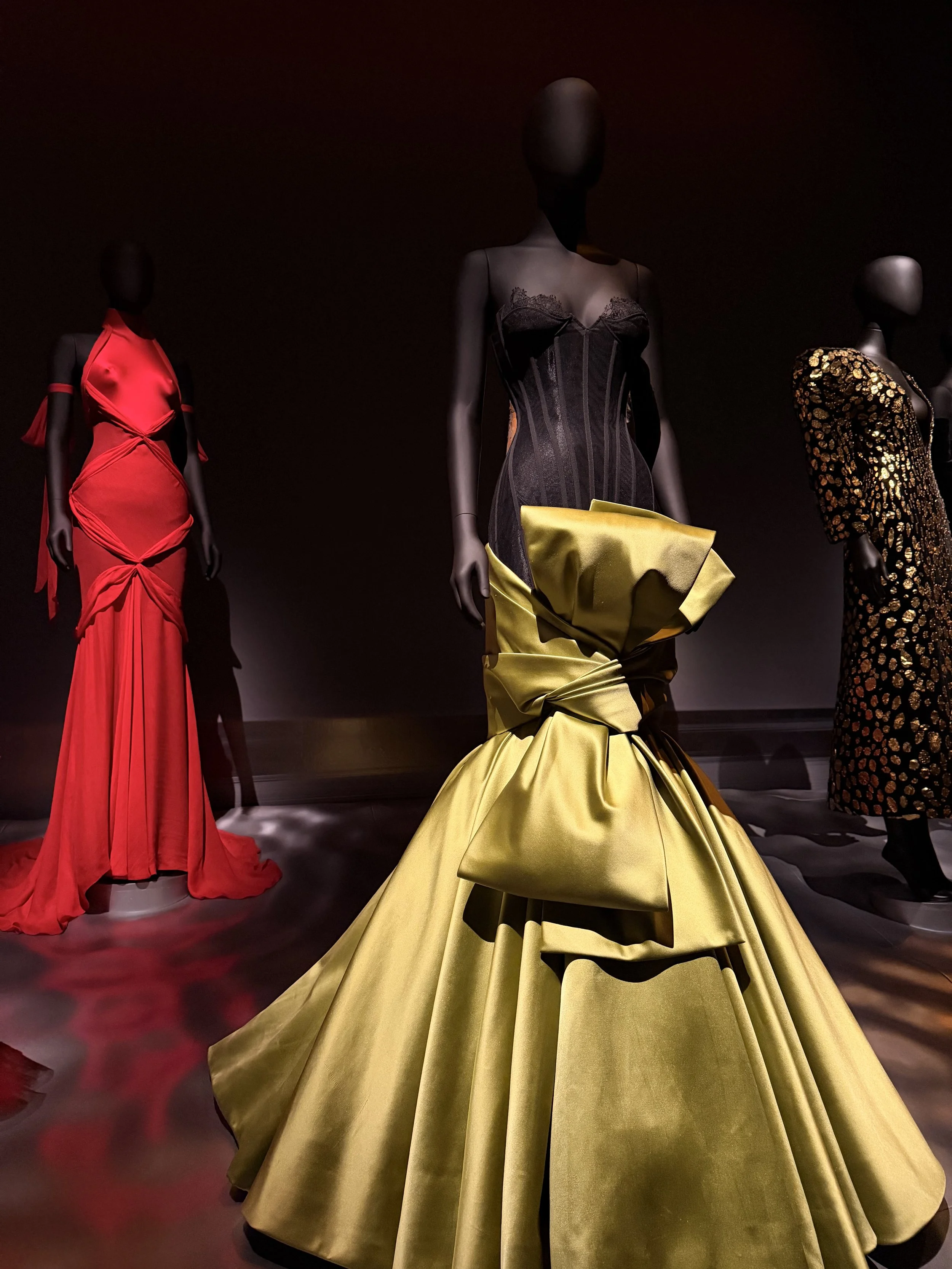
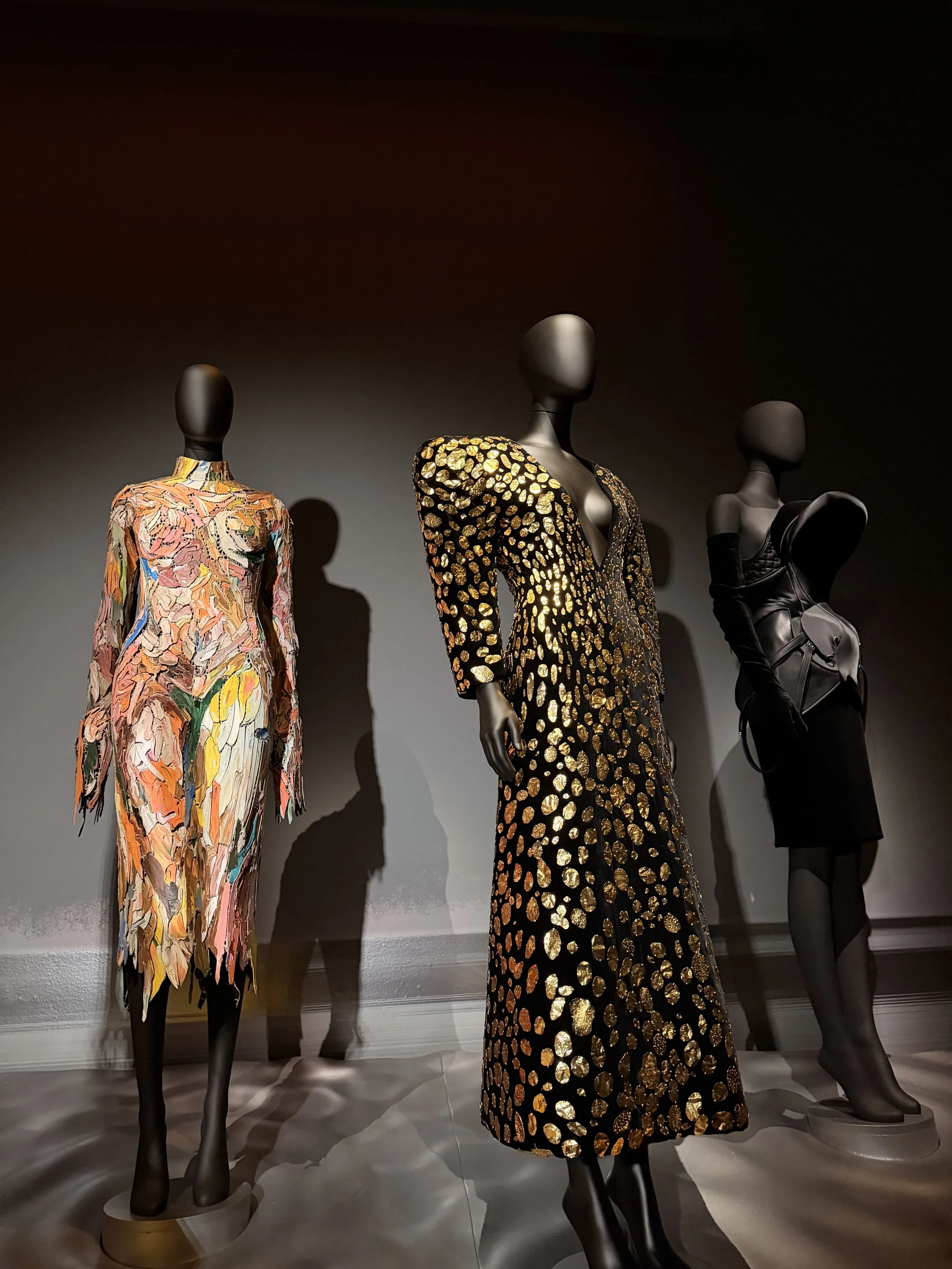
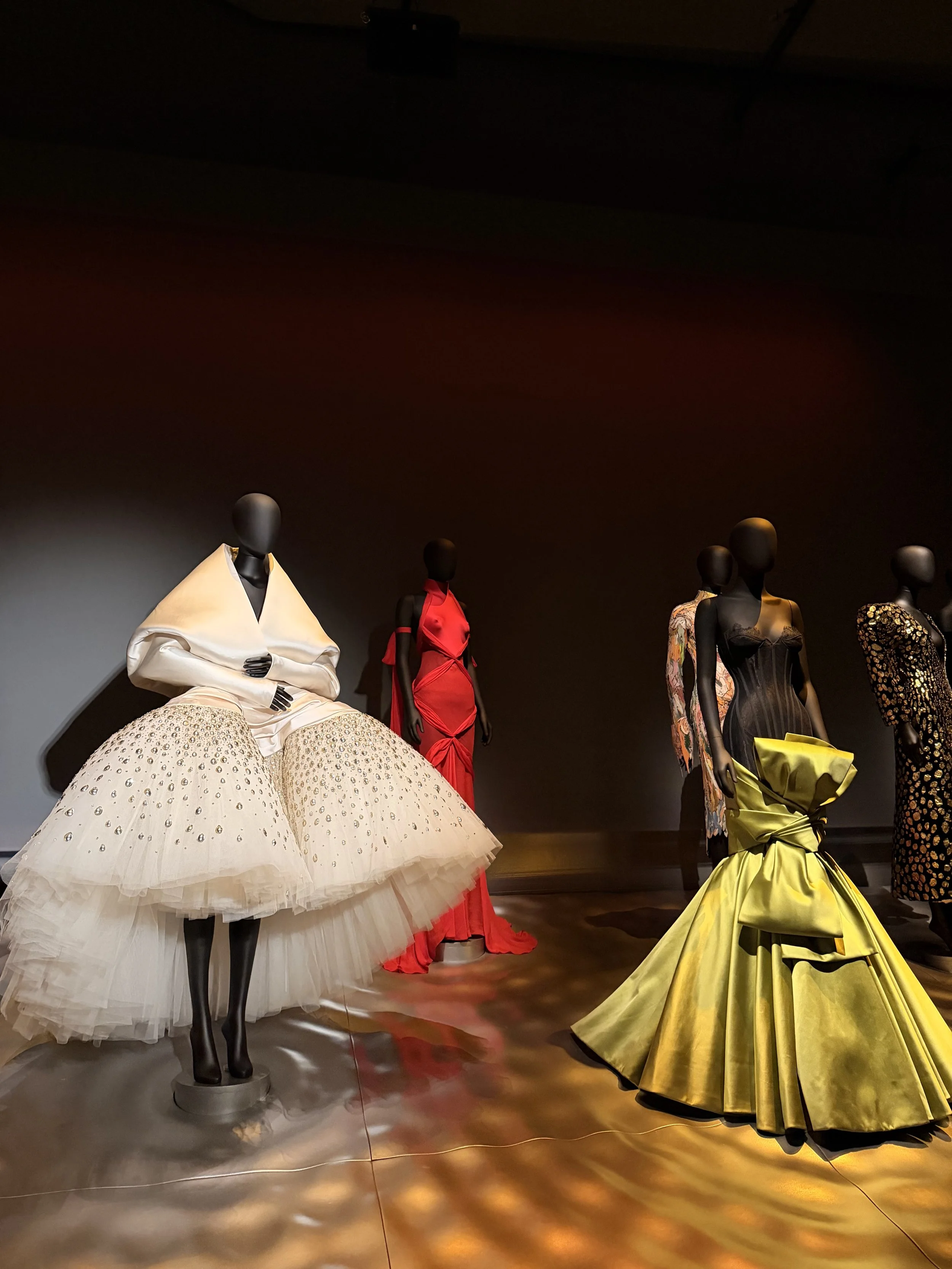
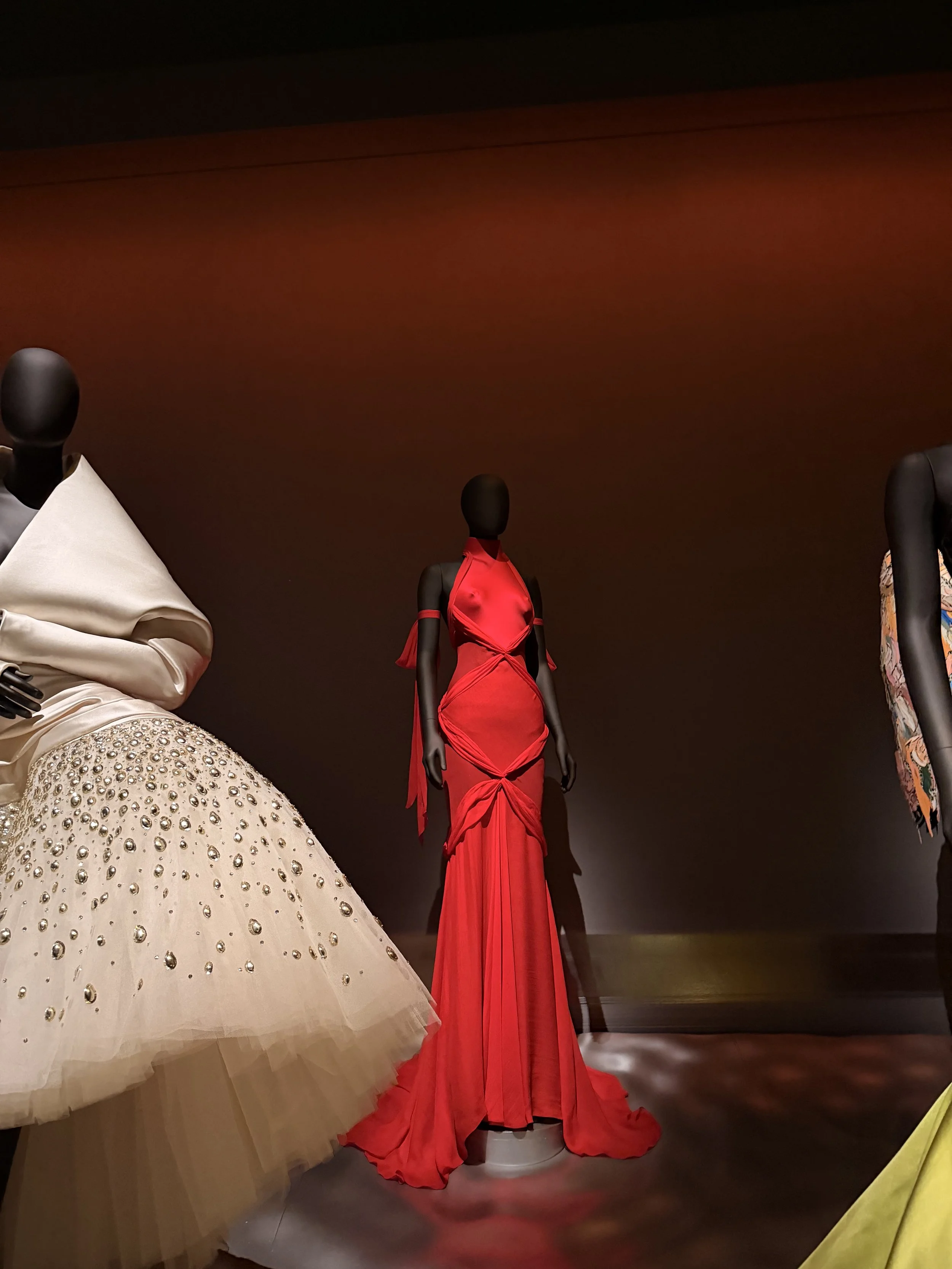
I am so glad that, as much as this exhibition was a celebration of Ms Elsa’s work, we got to see a glimpse of her legacy being carried so beautifully by the one and only, the Maison’s current Creative Director, Daniel Roseberry. Every time I witness his work, I get goosebumps because the task of paying homage and respecting house codes while creating something new and fresh under the insane pressures and budgets I’m sure he’s met with, is truly not for the faint of heart. If you couldn’t tell, I deeply respect his work. I love the fact that you could see how Daniel has continued to pull from the archives and ‘modernise’ Ms Elsa’s ideas, even though they are so timeless that they don’t require that much modernising. He somehow has managed to make something new relevant for the present while honouring the past.
According to the V&A itself, Schiaparelli “redefined fashionable taste and perceptions of beauty in the 20th century.” She expanded how a woman could show up, creating clothing and collections which were “practical and easy to wear yet undeniably stylish.” She designed for the modern woman, and it’s crazy that Schiaparelli’s definition of a ‘modern woman’ has travelled through centuries because I cannot tell you how many times Ronke and I exclaimed, ‘I would wear this today!’ What a beautiful thing art is, transcending space and time and having the ability to be appreciated beyond the artist’s lifespan.
Here’s to the bold disruptors of fashion, the ones that make us reflect and evoke visceral reactions drenched in wonder.

S I C K L E S E C R E T S
So it was a really sunny and lovely day, however, the UK is still deciding whether she wants to immerse herself fully in spring or not (it’s giving shy), and so best believe it got windy and a bit cold at some points. And so I am very glad I opted for this full denim ensemble I got from PLT. I felt warm, comfortable and oh-so-stylish, and so I’d give myself a solid 10/10 in the mobility dressing department. As for the exhibition itself, I spent so much time just in awe and running on adrenaline and excitement that I didn’t feel the need to sit down for a while. However, I did notice that the only seating option was quite far into the exhibition, and so for that, I would give it a 5/10 in terms of mobility offerings. Other than that, I had the most amazing time, and so glad I got to go with a fellow art-lover, a true custodian of the arts, my friend Ronke. She was just as curious, excited and in awe as I was, and so to experience that together was such a blessing.